Sensor Layer
Collects soil moisture, water level, temperature, humidity, and other application-specific measurements.
A flexible ESP32-based agricultural automation system with Wi-Fi and GSM connectivity, sensor-driven control, manual and automatic operation, and mobile and web monitoring.
A completed smart agriculture prototype designed to monitor environmental and soil conditions and control pumps, exhaust fans, heaters, cooling pads, and other actuators through local automation, Wi-Fi, GSM, mobile app, and web dashboard.

Agricultural environments often require repeated monitoring and manual operation of pumps, fans, heaters, cooling systems, and other equipment. Fixed timers alone cannot respond to changing soil, temperature, humidity, water, or environmental conditions.
Automate agricultural equipment using real sensor feedback and configurable thresholds.
Support both Wi-Fi and GSM communication for flexible deployment.
Allow both automatic and manual control of connected devices.
Provide remote monitoring and control through mobile and web applications.
Keep the platform generic so it can be adapted to different agricultural applications.
The system uses an ESP32 as the main controller to collect sensor data, evaluate configured conditions, and control connected actuators. Wi-Fi and GSM provide remote connectivity, while mobile and web applications allow users to monitor the system and manually control equipment when required.
A high-level view of the main blocks and handoffs in the current prototype or concept.
Collects soil moisture, water level, temperature, humidity, and other application-specific measurements.
Processes sensor data, applies automatic control rules, and coordinates connected devices.
Wi-Fi and GSM provide local or remote communication depending on deployment conditions.
Relay-controlled outputs can operate pumps, exhaust fans, heaters, cooling pads, valves, lights, and other agricultural equipment.
Mobile and web applications provide live monitoring, manual control, and system status.
Handles sensing, automation logic, connectivity, and actuator coordination.
Measure the conditions required for each agricultural application.
Controls pumps, fans, heaters, cooling pads, valves, and other connected loads.
Supports water-source monitoring and dry-run protection where required.
Provides remote communication where Wi-Fi is unavailable or unreliable.
Operates equipment based on configurable sensor thresholds and environmental conditions.
Allows users to override automatic operation when testing, maintaining, or directly controlling equipment.
Provides remote monitoring and control from a smartphone.
Displays system status, sensor information, and actuator state through a browser.
Supports communication through Wi-Fi or GSM depending on installation requirements.
Used where a reliable local internet connection is available.
Extends remote monitoring and control to agricultural sites without dependable Wi-Fi.
ESP32-based modular agricultural controller.
Wi-Fi and GSM communication.
Manual and automatic operating modes.
Remote monitoring through mobile and web applications.
Control of pumps, exhaust fans, heaters, cooling pads, valves, lights, and other actuators.
Sensor-based decisions instead of timer-only automation.
Water-level awareness and configurable safety rules.
Generic architecture adaptable to multiple agricultural applications.
The completed prototype combines ESP32-based sensing and control with Wi-Fi and GSM connectivity. Users can operate the system manually or allow automatic rules to control equipment based on sensor conditions. Mobile and web interfaces provide remote visibility and control without changing the core hardware architecture.
Validation covered sensor threshold behavior, manual and automatic control, repeated actuator switching, Wi-Fi and GSM communication, remote app control, dashboard operation, and basic protection scenarios such as water-source monitoring.
Sensor calibration varies with crop type, growing medium, and environmental conditions.
Different actuators require different power and control interfaces.
Remote agricultural locations can have unreliable network connectivity.
Automation thresholds must be tuned for each application rather than treated as universal values.
Delivered a completed multi-purpose agricultural automation prototype.
Demonstrated control of multiple types of agricultural equipment from one ESP32-based platform.
Enabled remote monitoring and control through both mobile and web applications.
Established a reusable architecture suitable for different agricultural domains.
Agricultural automation works best when sensor thresholds are configurable for each environment.
Manual override remains important even in highly automated systems.
Dual connectivity improves flexibility for installations with inconsistent network availability.
A generic controller can serve many agricultural applications when sensing and actuator interfaces remain modular.
Add historical analytics and alerting for long-term crop and environment monitoring.
Extend support for multiple independent control zones.
Add additional sensor and actuator modules for specialized agricultural applications.
This project demonstrates a flexible agricultural automation platform rather than a single-purpose irrigation controller. The same ESP32-based architecture can be adapted for greenhouses, smart irrigation, mushroom farming, aquaponics, hydroponics, and other controlled agricultural environments.
Its strength is the combination of sensing, automatic decision-making, manual override, dual Wi-Fi/GSM connectivity, multi-actuator control, and remote access through mobile and web applications.
Core Service
Connected system design spanning devices, firmware, communications, data flow, and operator-facing interfaces.
Firmware & Device Logic
Firmware-focused development for microcontroller-based systems, sensor interfaces, device logic, and hardware integration.
Proof of Concept
Prototype-oriented engineering for evaluating sensors, modules, power approaches, and early connected-system ideas.
Communications Strategy
Connectivity planning and remote telemetry system design shaped by range, power, reliability, infrastructure, and field conditions.
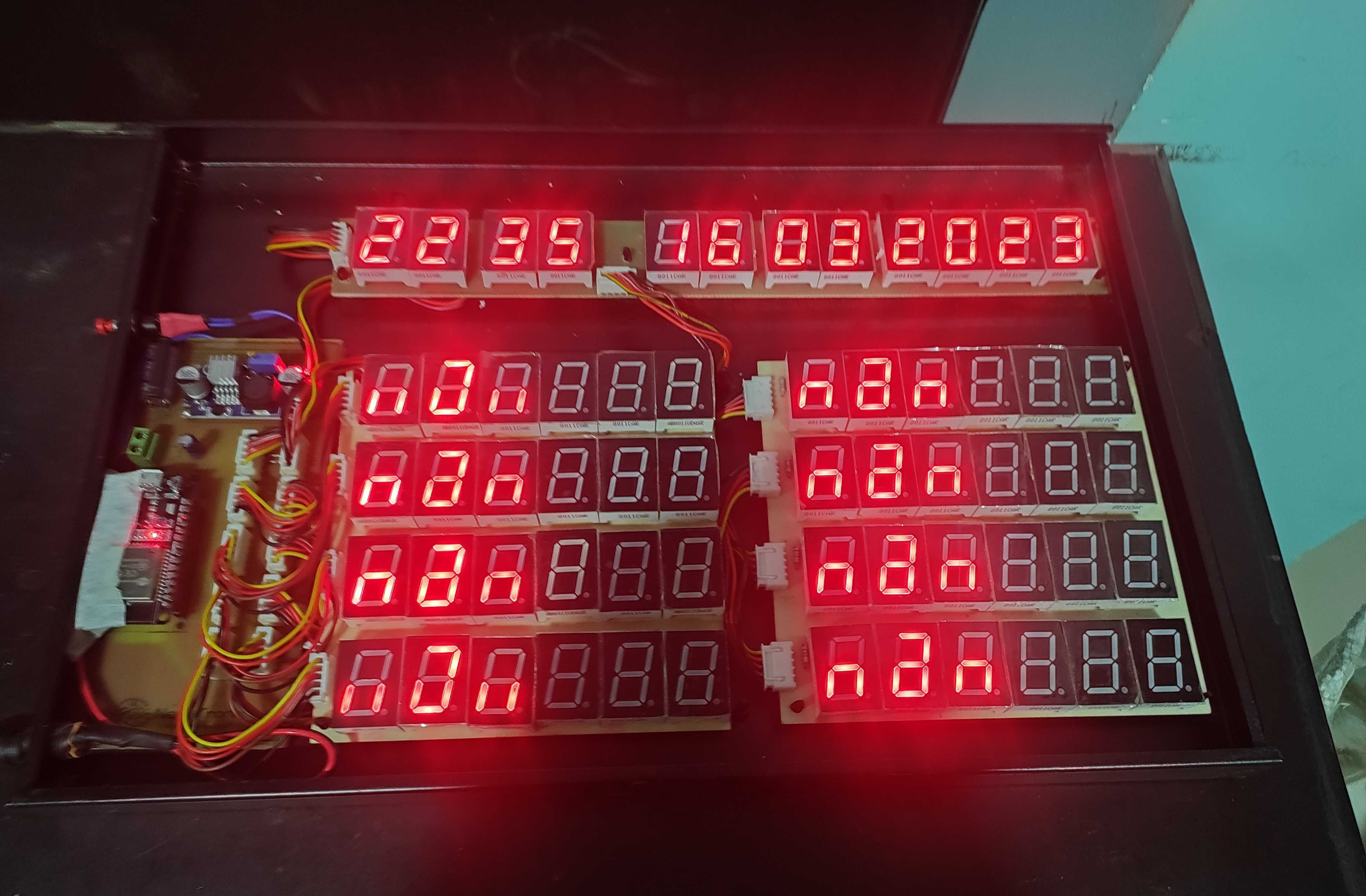
An ESP32-based real-time gold price display system using Wi-Fi, WebSocket communication, and large seven-segment displays for clear and continuously updated pricing.
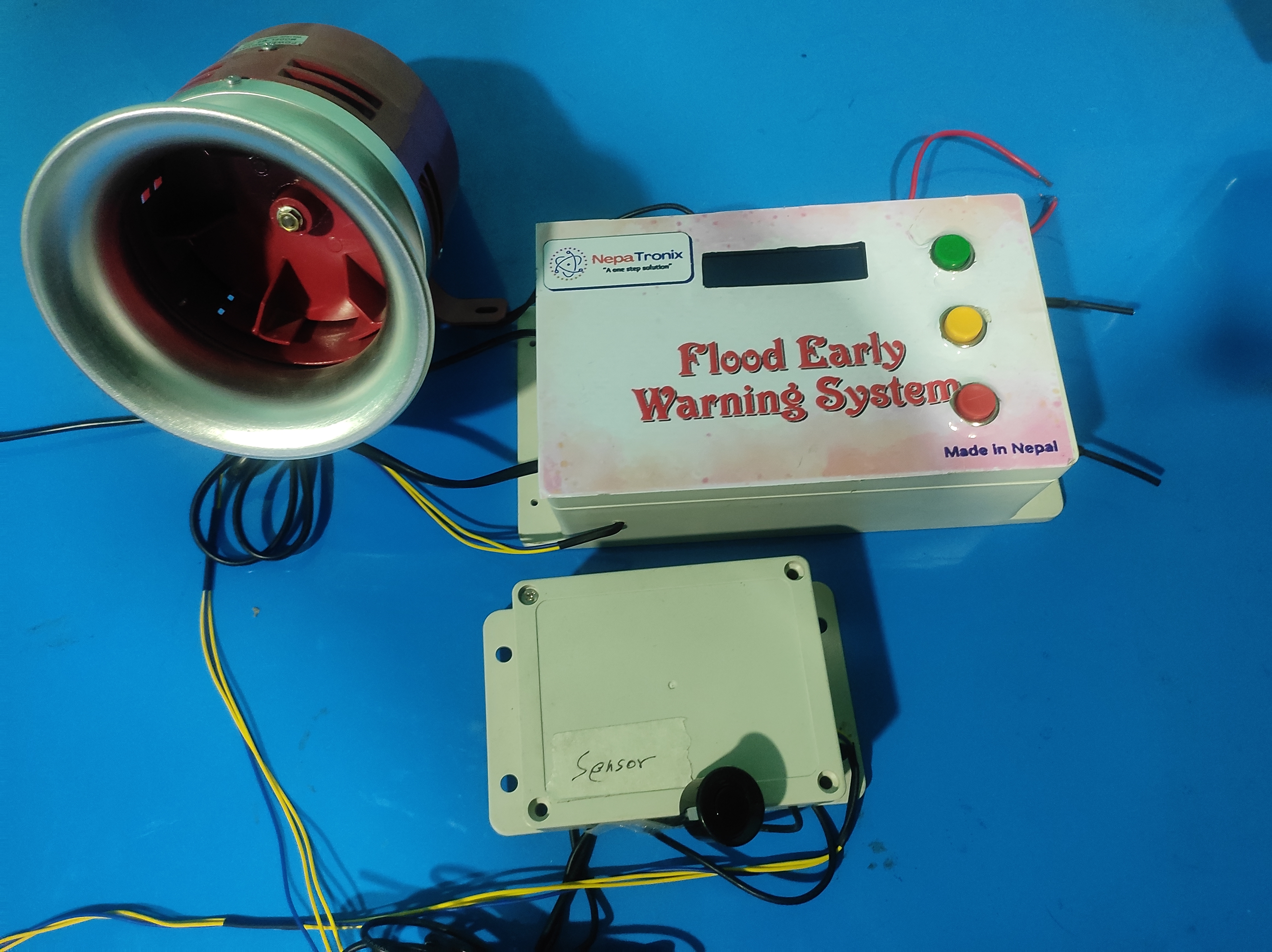
A real-time flood early warning system using ultrasonic water-level sensing, LoRa communication, multiple connected nodes, and a 120 dB siren for automatic and manual alerts.
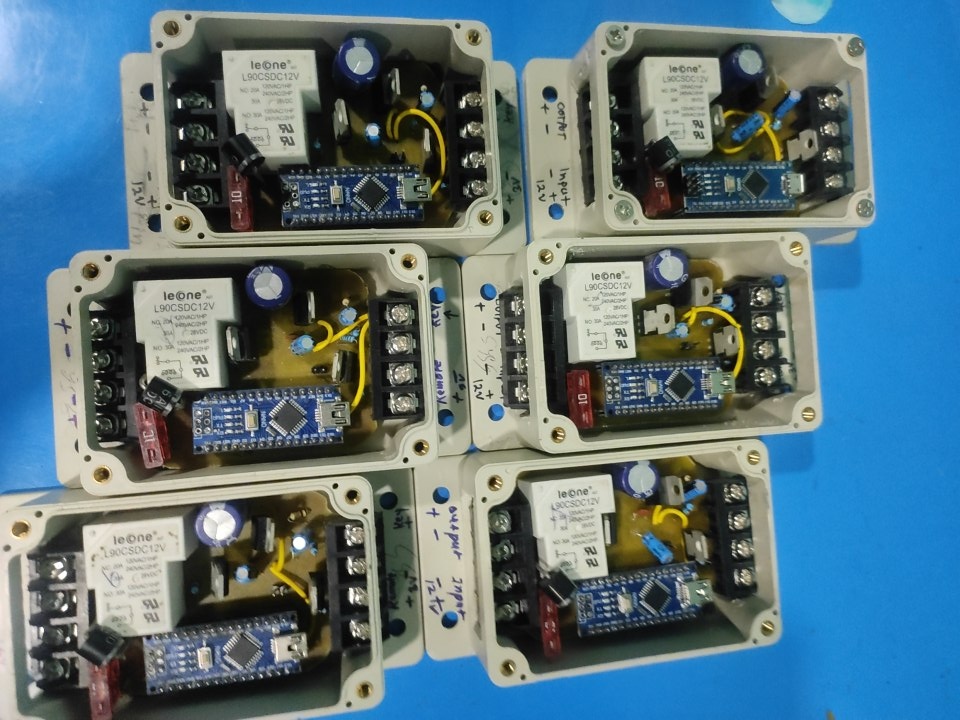
A compact vehicle accessory controller that detects ignition-key state and automatically switches connected devices such as LED displays, TVs, or other 12 V accessories.
Need a similar system?
If the challenge looks similar to this case study, we can map scope, hardware, firmware, connectivity, and supporting software before the build gets expensive.