Overview
Remote monitoring systems succeed or fail on communication decisions. A technically clean device is not enough if range is wrong, field conditions are unstable, buffering is missing, or infrastructure assumptions do not match reality.
This service focuses on system-level communication thinking: how devices send data, how they behave when connectivity drops, how retry and storage logic should work, and how field telemetry reaches software that people can actually use.
IoTSolutions treats connectivity as part of the overall engineering architecture, not as a checklist of protocol names.
What We Can Build
- Connectivity selection and architecture
- Remote telemetry design
- Data buffering and retry handling
- Connectivity recovery logic
- Offline-aware system planning
- Device-to-platform monitoring workflows
Application Areas
Remote Telemetry
Distributed Monitoring
Field Devices
Infrastructure Observation
Relevant Solution Areas
Solution Area
Environmental Monitoring
Monitoring systems for air, weather, water, and environmental conditions where sensing, buffering, connectivity, and dashboard visibility all matter.
- Air quality sensing
- Temperature and humidity monitoring
Solution Area
Smart Agriculture
Connected sensing and control systems for irrigation, greenhouse conditions, water availability, and remote agricultural telemetry.
- Soil moisture monitoring
- Irrigation control
Solution Area
Industrial IoT
Monitoring-oriented connected systems for equipment telemetry, edge data acquisition, device health visibility, and operational data collection.
- Machine condition monitoring concepts
- Equipment telemetry
Typical Engagement
01
Communication Fit Assessment
Compare range, power, bandwidth, cost, environment, and infrastructure before selecting a communication path.
02
Data Flow Design
Define how the device handles transmission, retry behavior, intermittent connectivity, and backend handoff.
03
Field-Oriented Refinement
Adjust the system around the realities of unreliable links, power limits, and operational usage.
Questions people often clarify
How is the right connectivity choice made?
The decision depends on range, infrastructure, power limits, data volume, environment, cost, and how reliable the system needs to be in the field.
Related Services
Core Service
IoT System Development
Connected system design spanning devices, firmware, communications, data flow, and operator-facing interfaces.
- Connected device architecture
- Sensor integration
- Firmware development
Firmware & Device Logic
Embedded Systems Development
Firmware-focused development for microcontroller-based systems, sensor interfaces, device logic, and hardware integration.
- ESP32 firmware development
- Embedded C/C++ implementation
- UART, I2C, SPI, and GPIO integration
Data Interfaces
IoT Dashboards & Platforms
Software interfaces and platform-oriented development for monitoring, telemetry visualization, device status, and connected operations.
- Live telemetry visualization
- Historical charting
- Device status interfaces
Related Projects
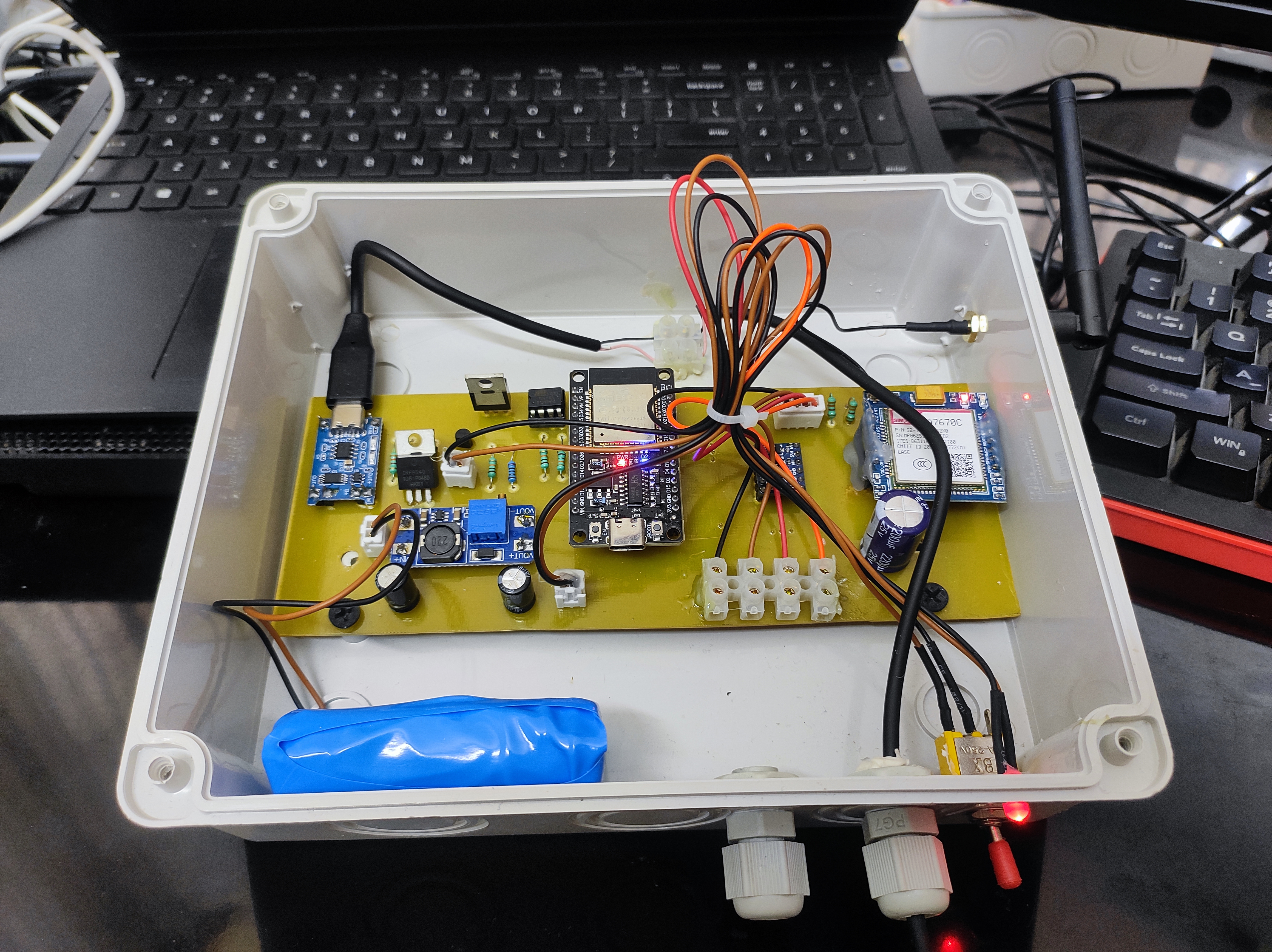
VayuCast Compact Microclimate Monitoring Device
A compact ESP32-based microclimate monitoring device using an SHT45 sensor, GSM communication, OTA firmware updates, and 18650 Li-ion battery backup.
- ESP32
- SHT45
- GSM
- OTA Firmware Update
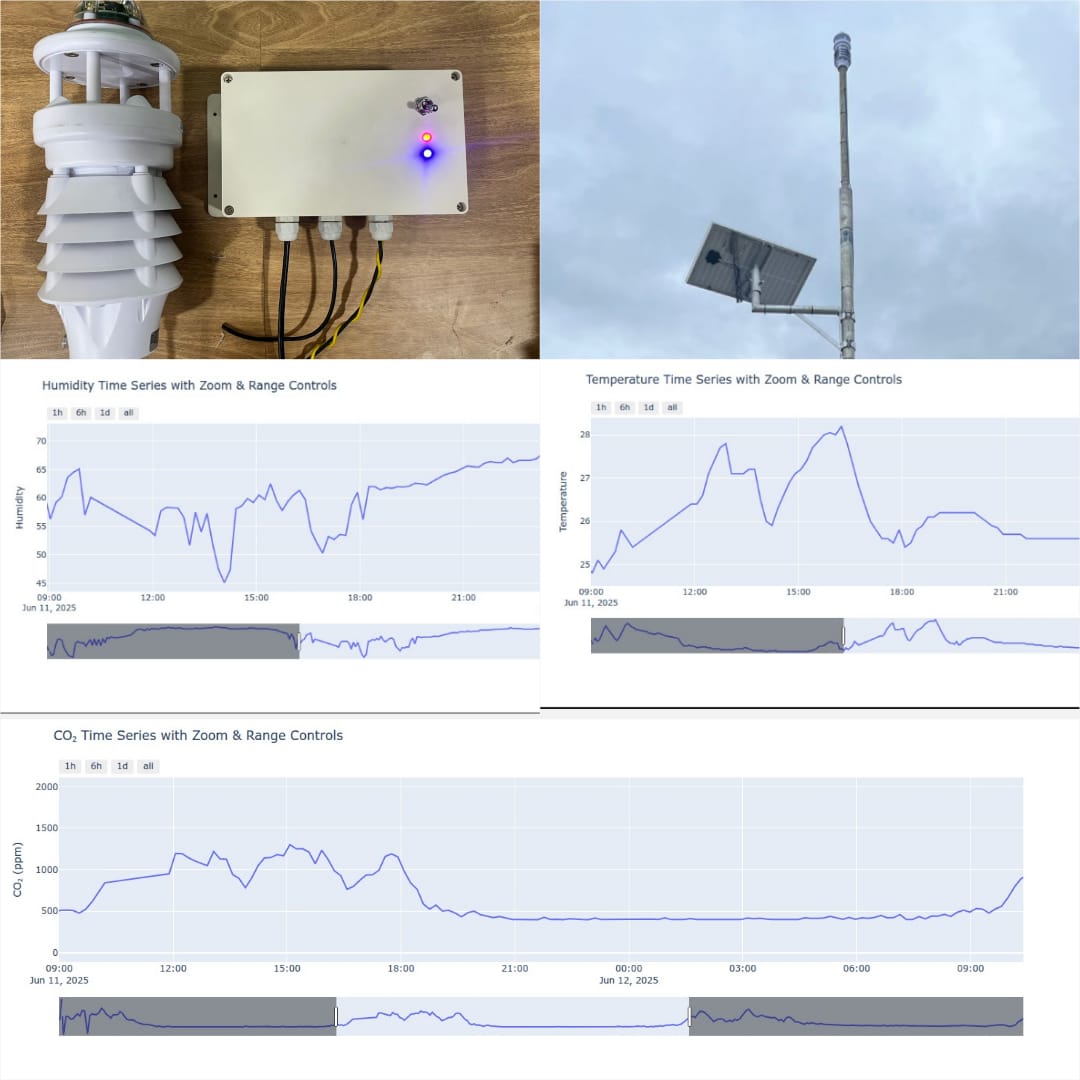
Solar-Powered Weather and Air Quality Monitoring Station
A solar-powered ESP32 weather station that monitors temperature, humidity, CO₂, light intensity, wind, PM2.5, and PM10 using RS485-connected sensors and GSM-based remote communication.
- ESP32
- RS485
- Modbus
- GSM

Smart Agriculture Automation and Irrigation Control System
A flexible ESP32-based agricultural automation system with Wi-Fi and GSM connectivity, sensor-driven control, manual and automatic operation, and mobile and web monitoring.
- ESP32
- Wi-Fi
- GSM
- Soil Moisture Sensor