Core Service
IoT System Development
Connected system design spanning devices, firmware, communications, data flow, and operator-facing interfaces.
- Connected device architecture
- Sensor integration
- Firmware development
An ESP32-based sanitary pad vending machine with RFID access, automated stepper-motor dispensing, local status display, battery backup, and remote monitoring.
MeroSathi is a robust smart sanitary pad vending machine designed to improve convenient access to menstrual hygiene products. The system combines an ESP32 controller, RFID-based user access, stepper-motor dispensing, local information display, battery backup, and remote monitoring through a connected dashboard.
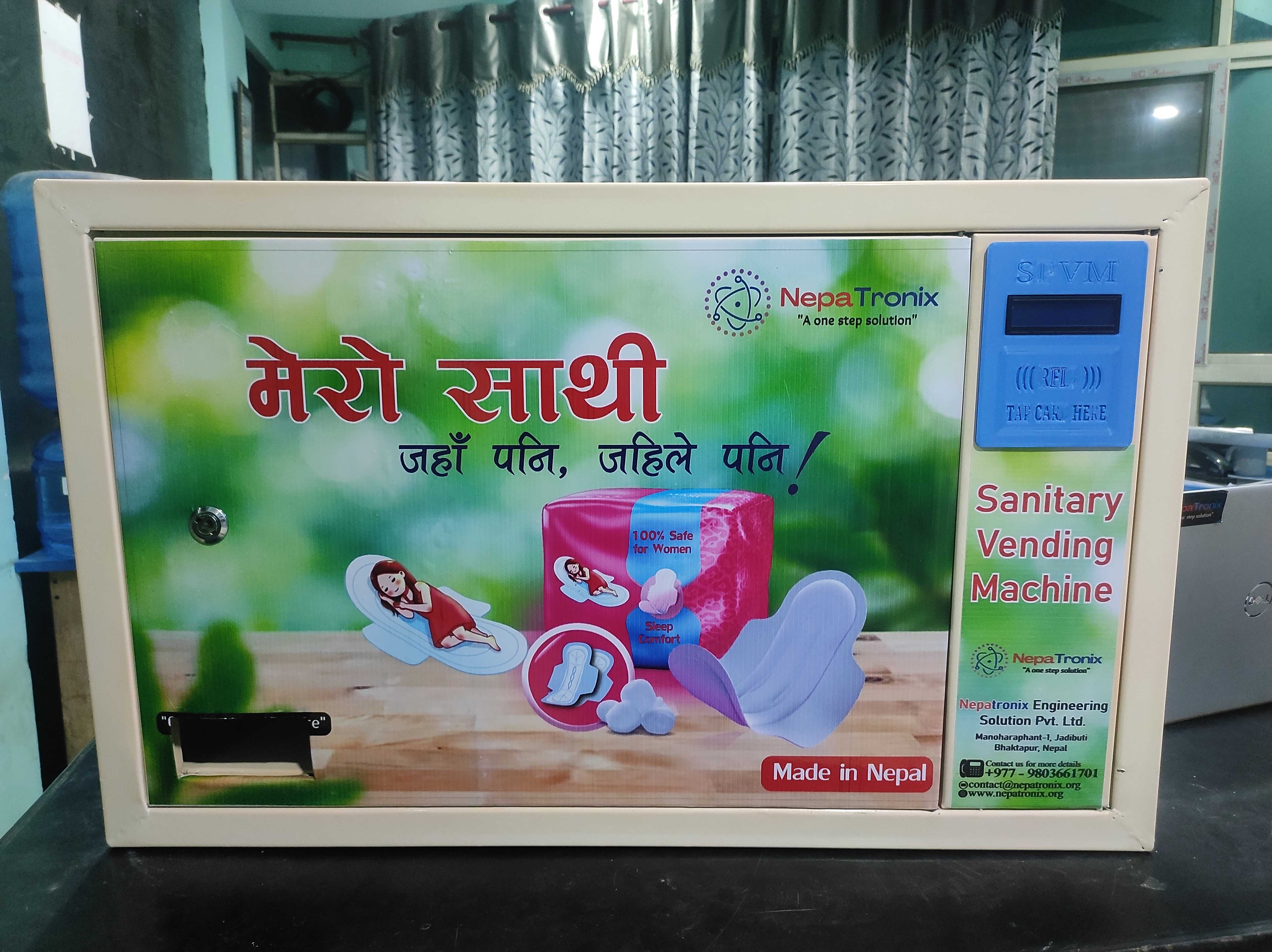
MeroSathi is a smart sanitary pad vending machine developed to make menstrual hygiene products more accessible through a simple, automated, and remotely monitorable system.
The machine uses an ESP32 microcontroller as the main controller. Users access the service by tapping an authorized RFID card, after which the system controls a stepper-motor-based dispensing mechanism to release a sanitary pad.
The product combines embedded electronics, mechanical dispensing, user identification, local information display, backup power, and remote monitoring in a strong metal enclosure suitable for installation in different public or institutional environments.
Access to sanitary pads can be difficult in schools, offices, public institutions, and other shared spaces, especially when products are not immediately available when needed.
A practical vending system should therefore be:
MeroSathi was developed around these requirements.
The system integrates an ESP32-based embedded controller with RFID authentication and an electromechanical dispensing mechanism.
A user taps an RFID card on the reader. After the card is recognized, the controller operates a stepper motor connected to a spring-based dispensing mechanism. The rotating spring advances one sanitary pad toward the dispensing outlet.
A local display provides information such as machine status and available pad information, while operational data can also be sent to a remote dashboard for monitoring.
The complete system is installed inside a strong metal structure designed for practical long-term use.
The overall system follows this flow:
RFID Card → RFID Reader → ESP32 Controller → Stepper Motor Driver → Stepper Motor → Spring Dispensing Mechanism
Supporting subsystems include:
ESP32 → Local Display
ESP32 → Network / IoT Communication → Remote Monitoring Dashboard
AC Supply → Power System → Machine
Battery Backup → Power System → Machine
The main hardware elements include:
The ESP32 manages the main operating logic of the vending machine.
Its responsibilities include:
The embedded architecture allows the dispensing logic, user access, display, and monitoring functions to operate as one integrated system.
Users interact with the machine by tapping an RFID card.
The RFID system provides a controlled way to access the vending service and allows usage events to be associated with authorized cards or users where required by the system configuration.
This avoids the need for complicated physical controls and makes the interaction simple for users.
Sanitary pads are stored inside the machine using a spring-based mechanical arrangement.
A stepper motor rotates the spring by a controlled amount during each valid dispensing operation. This movement advances the stored sanitary pad and releases one unit through the dispensing section.
Using a stepper motor allows the controller to manage the dispensing movement in defined steps rather than relying on an uncontrolled continuous motor rotation.
The machine includes a local display for communicating useful information to users and operators.
Depending on the operating state, the display can provide information such as:
This gives immediate feedback without requiring access to the remote dashboard.
MeroSathi includes IoT monitoring capability so important operational data can be viewed remotely through a dashboard.
The remote monitoring system can be used to observe information such as:
This reduces the need to physically inspect the machine simply to determine whether it requires attention.
The machine is primarily powered from an AC supply.
A rechargeable backup power system is also included so the machine can continue operating during temporary power interruptions.
The designed backup capacity is approximately two days under the intended operating conditions, although actual backup duration depends on usage frequency, battery condition, and system load.
The electronics and dispensing mechanism are housed inside a strong metal enclosure.
The enclosure provides:
The robust construction was an important part of making the prototype suitable for practical installation rather than limiting it to a laboratory demonstration.
The project required integration across multiple engineering areas rather than only firmware development.
Important challenges included:
The prototype was developed by integrating the embedded controller, RFID interface, motor-control electronics, mechanical spring assembly, local display, power system, and remote monitoring functionality.
The dispensing operation is triggered only after the required user interaction. The ESP32 then coordinates the motor movement and system status while the monitoring layer provides visibility into the machine’s operation.
The project demonstrates the integration of embedded systems, IoT connectivity, automation, electromechanical design, and product prototyping in a single practical system.
Testing focused on the complete vending workflow, including:
Mechanical dispensing and alignment are especially important because reliable operation depends on both the firmware and the physical storage mechanism working together.
MeroSathi was developed as a completed working product prototype integrating the electronic, mechanical, power, access-control, and monitoring subsystems.
It represents one of the early product-oriented systems developed with a focus on solving a practical social need through embedded and IoT engineering.
Beyond its technical design, the purpose of MeroSathi is to support easier access to menstrual hygiene products.
Automated sanitary pad availability can be useful in environments such as:
The project demonstrates how connected embedded systems can be applied not only to industrial monitoring or automation, but also to practical products with a direct social purpose.
This project combines several IoTSolutions capability areas:
Core Service
Connected system design spanning devices, firmware, communications, data flow, and operator-facing interfaces.
Firmware & Device Logic
Firmware-focused development for microcontroller-based systems, sensor interfaces, device logic, and hardware integration.
Proof of Concept
Prototype-oriented engineering for evaluating sensors, modules, power approaches, and early connected-system ideas.
Communications Strategy
Connectivity planning and remote telemetry system design shaped by range, power, reliability, infrastructure, and field conditions.
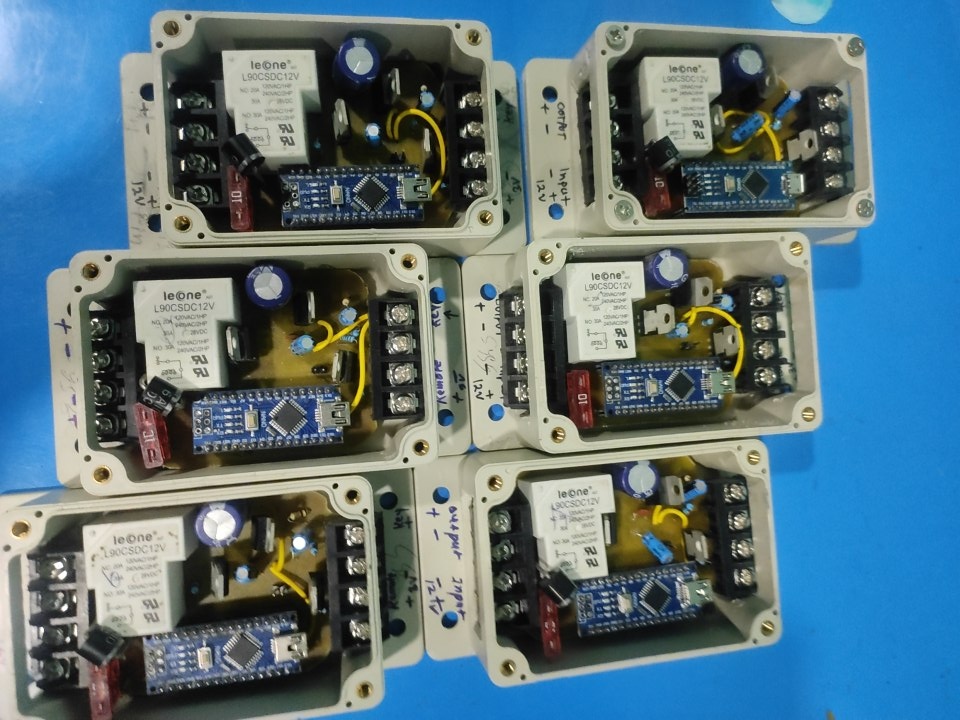
A compact vehicle accessory controller that detects ignition-key state and automatically switches connected devices such as LED displays, TVs, or other 12 V accessories.
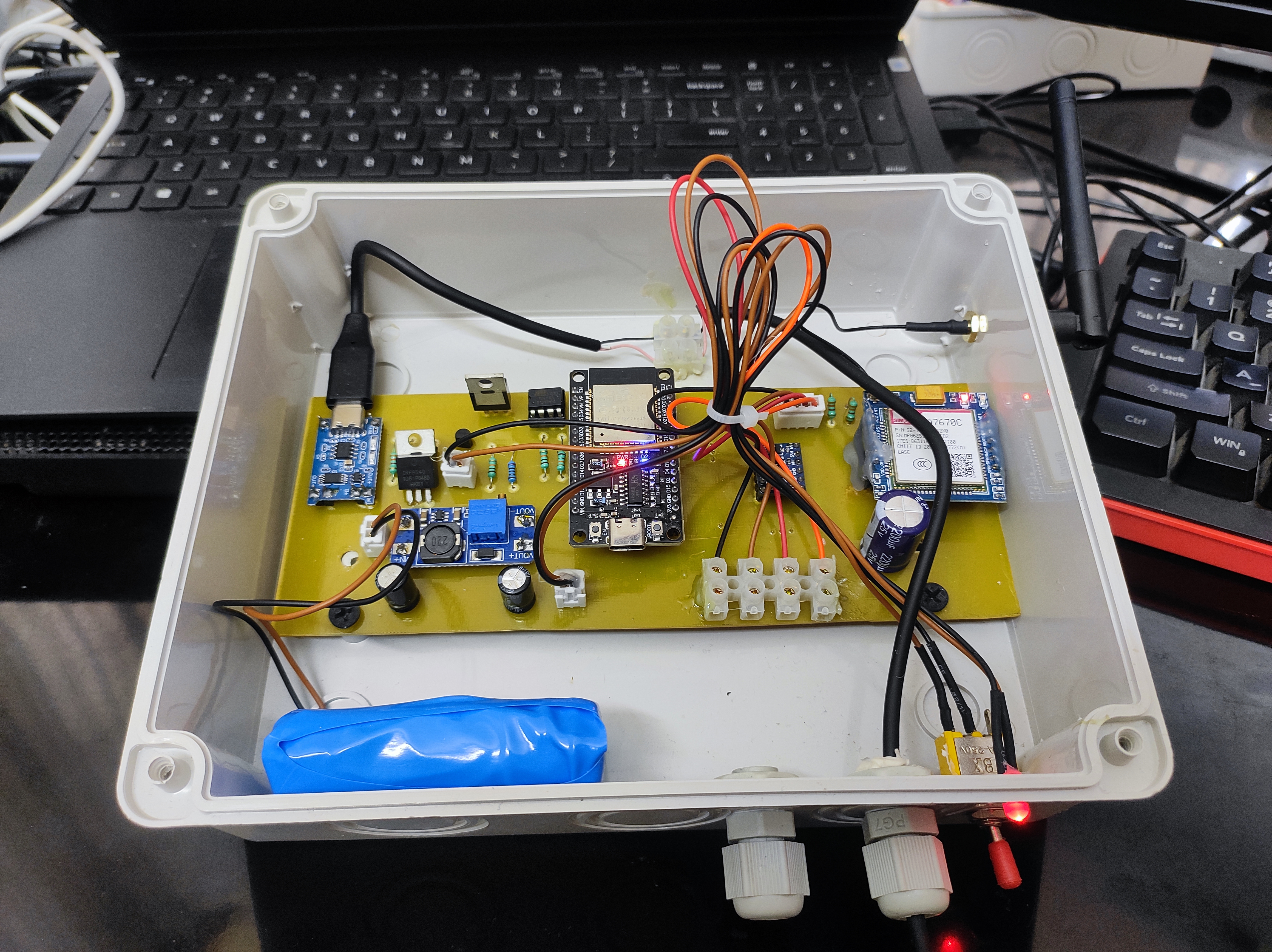
A compact ESP32-based microclimate monitoring device using an SHT45 sensor, GSM communication, OTA firmware updates, and 18650 Li-ion battery backup.

A flexible ESP32-based agricultural automation system with Wi-Fi and GSM connectivity, sensor-driven control, manual and automatic operation, and mobile and web monitoring.
Need a similar system?
If the challenge looks similar to this case study, we can map scope, hardware, firmware, connectivity, and supporting software before the build gets expensive.