ESP32 for IoT Prototyping: Where It Fits
A grounded look at what ESP32 is good at in early IoT development, where its interfaces help, and when a different platform may be a better choice.
- ESP32
- Firmware
- Wi-Fi
- BLE
- GPIO
- I2C
- Published
- Reading time
- 4 min read
- Author
- Saroj Chaudhary
- Role
- IoT & Embedded Systems Engineer
ESP32 appears in a huge number of prototypes for a simple reason: it covers a lot of early engineering ground without making the first build unnecessarily expensive or slow.
That does not make it the right answer for every product. It just makes it a very practical place to start when the goal is to validate sensing, connectivity, firmware structure, and device behavior quickly.
If the project is already clearly centered on this platform, the dedicated ESP32 development page explains how IoTSolutions approaches the work beyond the general guidance in this article.
Why ESP32 shows up so often
In early prototype work, the most valuable platform is often the one that removes friction from the first round of learning. ESP32 does that well because it gives you:
- Wi-Fi and BLE on one platform
- a broad ecosystem of development boards
- familiar peripheral interfaces
- enough processing headroom for typical device logic
- affordable hardware for repeated experiments
If the project is still in the “prove the workflow” stage, that balance matters more than picking the most specialized chip on day one.
The interfaces that make it practical
ESP32 is especially useful when you are integrating real hardware instead of only simulating data.
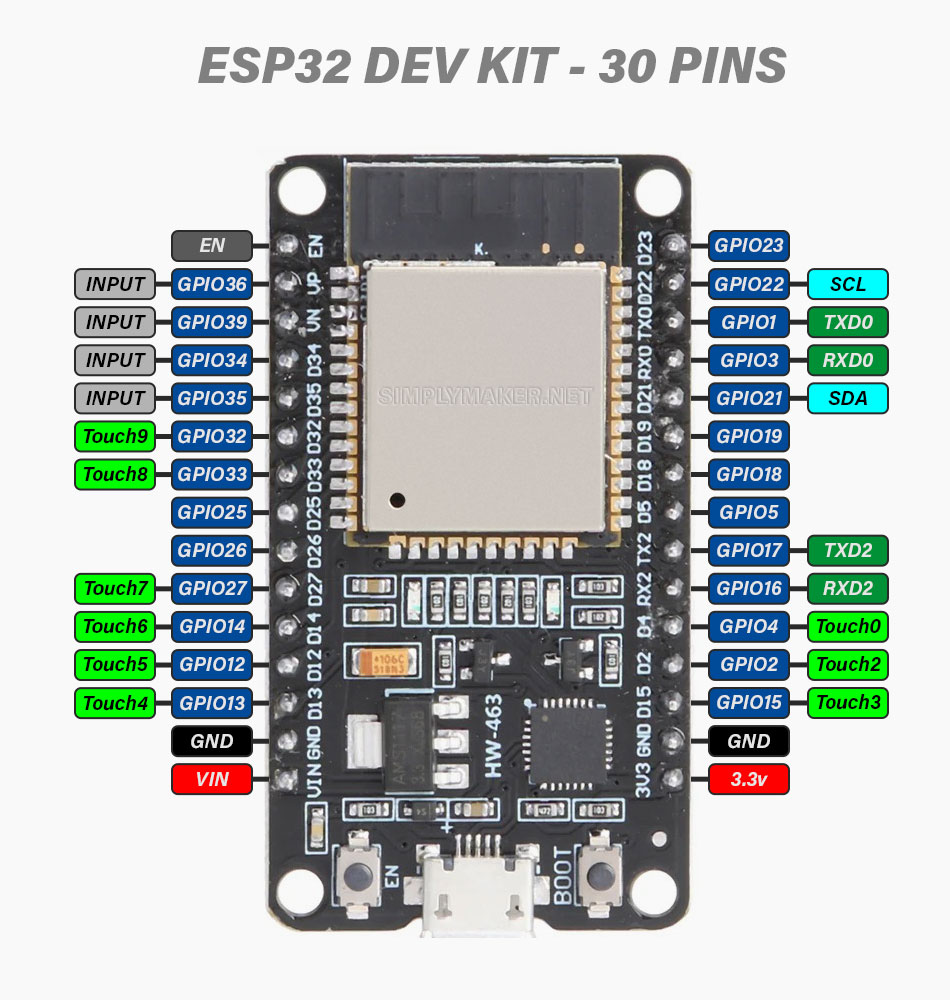
GPIO
General-purpose digital pins make it easy to test switches, status LEDs, relays, interrupts, and simple digital sensors. For prototype stages, that flexibility is often more valuable than a perfectly optimized board layout.
ADC
Analog inputs are helpful when you need to explore simple variable signals such as certain sensor outputs, divider-based battery readings, or calibration experiments. In practice, this is often enough for first-pass testing before the analog front end is refined.
UART
UART is handy for GPS modules, cellular modems, debug output, and many third-party peripherals. If your prototype includes GSM/LTE, UART quickly becomes part of the core workflow.
I2C
I2C is one of the reasons ESP32 is so common in sensor prototypes. Environmental sensors, displays, and several low-speed peripherals are easy to wire into a first-stage build.
SPI
SPI becomes useful when the build grows into displays, external memory, storage, or faster peripheral communication. It also helps keep the path open for more capable prototype features later.
When ESP32 is a strong choice
ESP32 is usually a good fit when you want to:
- prototype a connected sensor node
- validate dashboard telemetry over Wi-Fi
- build a small automation controller
- explore BLE-based companion-device workflows
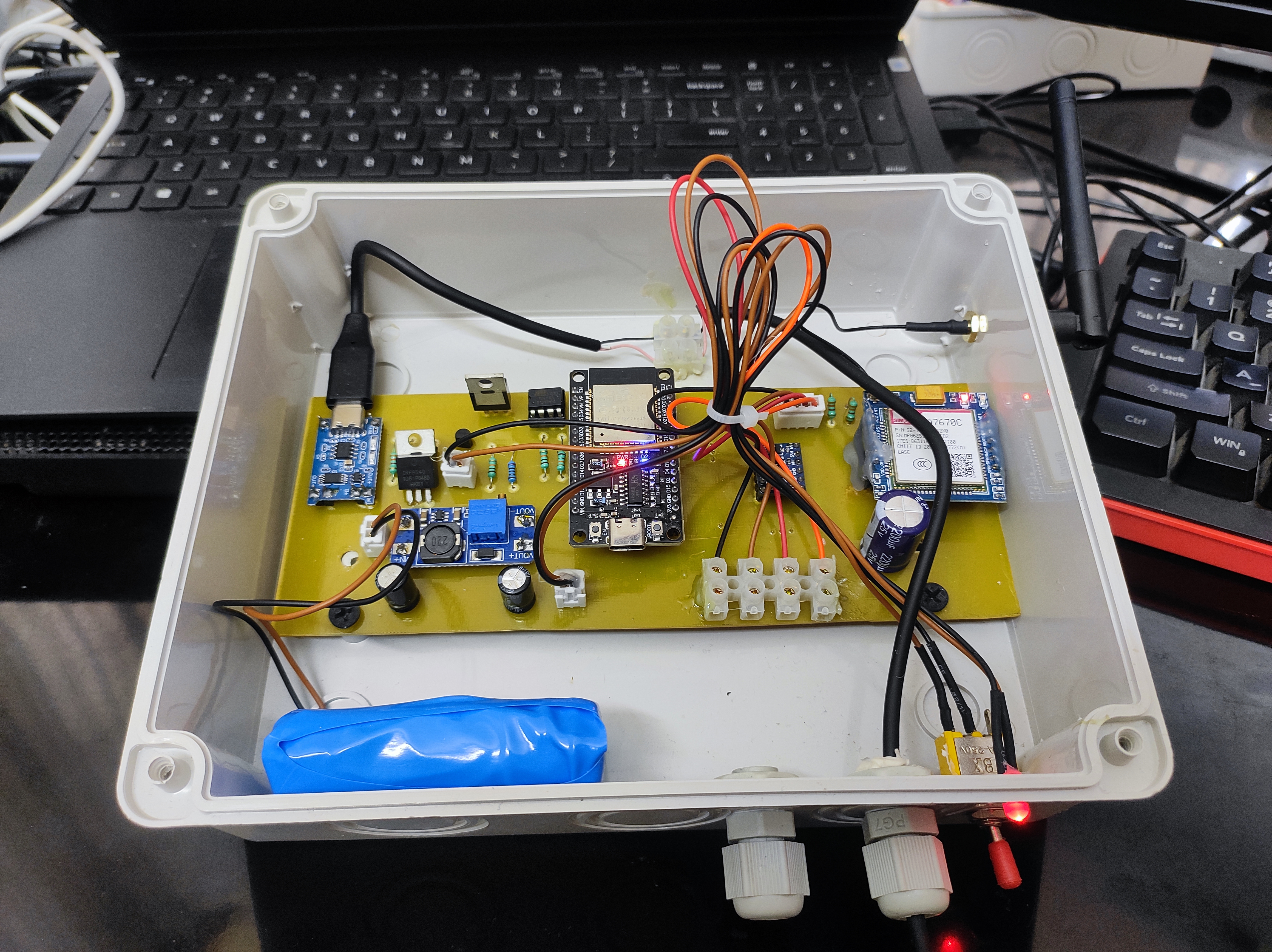
- test firmware behavior before committing to a custom board
That is why it makes sense in work adjacent to embedded systems development and hardware prototyping. It lets you learn about the system before the more expensive hardware decisions become fixed.

The smart irrigation prototype is a good example of where this kind of platform is useful: the important engineering questions are around sensing, control logic, safety behavior, and staged iteration. You do not need to overcomplicate the controller choice to learn those lessons.
Where ESP32 is not automatically the best answer
It helps to be honest about the limits too.
Ultra-low-power products
If the long-term goal is a very aggressive battery life target, a dedicated low-power MCU may eventually be a better fit than a development-friendly Wi-Fi/BLE platform.
Products with strict certification or lifecycle demands
A prototype board is not a final product architecture. Certification path, supply-chain stability, long-term availability, and manufacturing constraints can all push a mature product in a different direction.
Heavy local processing
If the device must do larger local computation, advanced edge inference, or complex media handling, another compute platform may be more appropriate.
Harsh industrial requirements
The microcontroller itself is only part of the story. Harsh environments, EMI concerns, isolation requirements, and reliability constraints usually demand deeper hardware design than a fast development board prototype.
A good ESP32 prototype still needs discipline
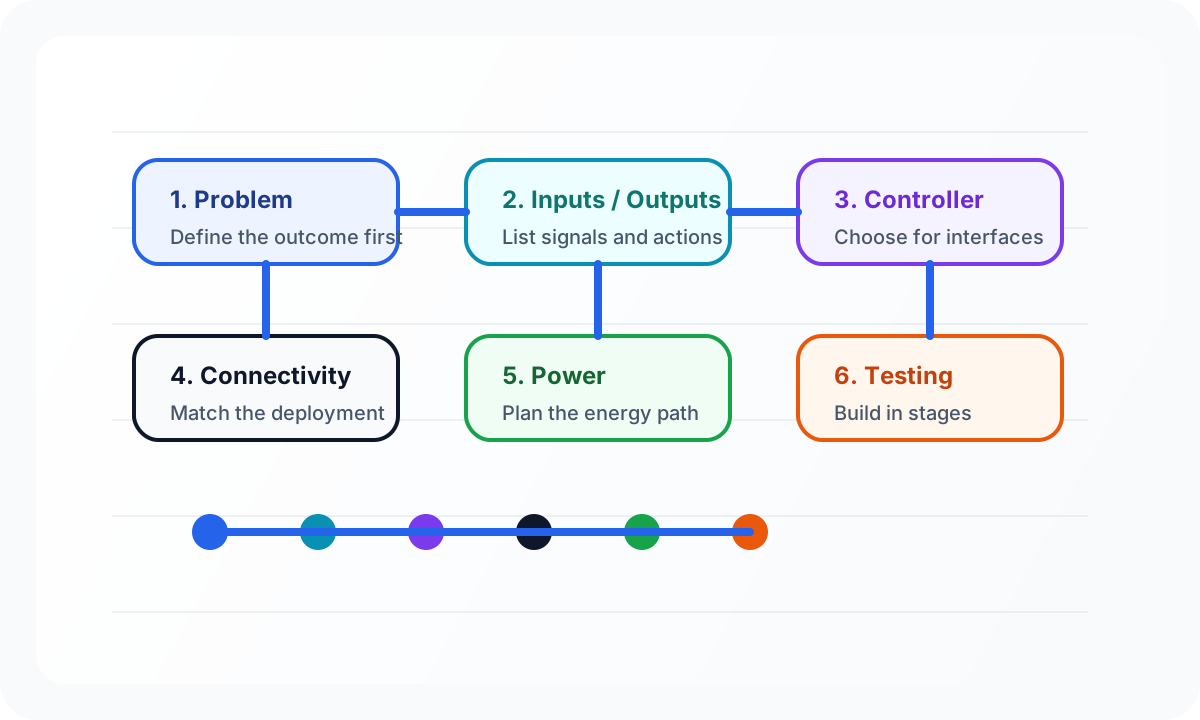
Using ESP32 does not remove the need for system thinking. A credible prototype should still answer:
- what data matters
- how often the device communicates
- what happens when the network disappears
- how the power path behaves
- how the firmware will be organized and tested
That is one reason research and academic prototyping benefits from a platform like ESP32: it is flexible enough to explore ideas, but still real enough to expose design mistakes early.
For student teams that need the scope and support boundaries stated more directly, there is also a focused final-year project support page.
A simple decision rule
If the goal is to learn fast about a connected system, ESP32 is often a strong starting point.
If the goal is already to optimize for final production constraints, you may outgrow it quickly.
That distinction matters. ESP32 is not valuable because it is fashionable. It is valuable because it can shorten the path from idea to working engineering feedback.